


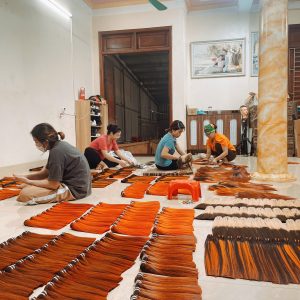


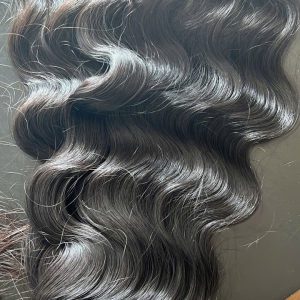
Hair Bundles 35cm Baby Hair Natural Color Bone straight Super Double Drawn
Price range: $80 through $1.799
- Vật liệu tóc : Tóc thô
- 100% tóc người, Tóc mềm mượt, Không sợi tổng hợp, Không rối, Không giật
- Kết cấu tóc: Thẳng tự nhiên, Lượn sóng, Xoăn, Lượn sóng sảng khoái, Kinky, Yaky…
- Chiều dài: 20cm đến 80cm
- Trọng lượng: 100g/ bó mỗi chiếc
Hair Weft: A Revolutionary Approach to Professional Hair Extensions
In the world of beauty and fashion, hair extensions have become an essential tool for transforming one’s appearance. Whether for added length, volume, or a touch of color, extensions are always a go-to solution. Among the different types of extensions available, Machine Hair Weft has emerged as a top choice for both professionals and individuals. This article explores in detail machine weft hair extensions, their production process, advantages, applications, and why they are widely favored in the beauty industry.
1. What is Machine Weft Hair?

Machine weft hair is created by using sewing machines to stitch strands of hair together into a continuous track or strip. The hair is sewn tightly by machine, producing a seamless, durable weft that can be attached to natural hair. Unlike hand-tied wefts—which require skilled artisans to knot each strand by hand—machine wefts are manufactured through a standardized, efficient, and automated process. This allows for better quality control and greater consistency, resulting in a more reliable product.
The main difference between machine wefts and hand-tied wefts lies in how the hair is secured horizontally. With machine wefts, the strands are stitched onto a base material using a sewing machine, whereas hand-tied wefts are made by manually tying each strand onto a woven base.
2. The Machine Weft Production Process

The production of machine weft hair is complex and involves multiple steps to ensure high-quality results. Below are the key stages:
-
Selection: The process begins with selecting high-quality hair, typically 100% human hair, chosen for texture, thickness, and style. The hair is sorted and cleaned to remove impurities, ensuring only the best strands are used.
-
Cutting: The selected hair is trimmed to the desired lengths. Depending on customer or brand requirements, hair is cut to different lengths to create a variety of machine wefts, from short to long.
-
Wefting: Using specialized machinery, the hair is sewn onto the base material, securing the strands in alignment. This ensures a neat and uniform appearance.
-
Sealing: After wefting, the tracks are sealed to prevent shedding. This crucial step ensures durability and long-lasting performance. Proper sealing keeps the hair intact and tangle-free over time.
-
Quality Control: Each weft undergoes quality checks. Any uneven strands, weak points, or impurities are removed. This guarantees every weft meets standards of strength, appearance, and comfort.
-
Packaging and Distribution: Once approved, the wefts are packaged—usually in bundles—and labeled with length, color, and texture details, ready for distribution.
3. Advantages of Machine Weft Hair
Machine weft hair offers many benefits, making it a preferred choice among professionals and consumers:
a. Durability and Strength
Machine wefts are highly durable. The use of sewing machines ensures strands are tightly secured, reducing the risk of shedding. This makes them a long-lasting option for everyday styling and maintenance.
b. Uniformity and Consistency
Machine wefts are known for their uniform appearance. Each strand is sewn with precision, resulting in a neat and consistent finish. Unlike hand-tied wefts, which may vary slightly, machine wefts provide a smooth, natural, and seamless look.
c. Ease of Application
Machine wefts are versatile and easy to use. They can be sewn, glued, or clipped into natural hair depending on user preference. Their consistent structure also makes the installation process quicker and smoother.
d. Cost-Effectiveness
Because they are produced through automated processes, machine wefts are generally more affordable than hand-tied wefts. Lower labor costs make them a budget-friendly option for those wanting volume or length without overspending.
e. Versatility
Machine wefts come in a wide range of textures, colors, and lengths. They can also be cut, layered, or styled to match different hairstyles, making them a flexible choice for various styling needs.
f. Reduced Shedding
Thanks to the reinforced stitching and sealing process, machine wefts shed significantly less hair compared to other types of extensions. This helps maintain a polished, long-lasting look.

4. Applications of Machine Weft Hair
Machine wefts have multiple uses in the beauty industry, including:
a. Hair Extensions
The most common use is for adding length, volume, or color to natural hair. They can be installed using different methods such as sewing, tape-in, or clip-in, depending on user preference.
b. Volume and Thickness
Individuals with thin or fine hair can use machine wefts to add fullness and density, achieving a healthier, thicker look without permanently altering their natural hair.
c. Special Events and Photoshoots
Machine wefts are popular for weddings, photoshoots, and fashion shows. Their ability to create dramatic, voluminous hairstyles makes them a top choice for professional stylists working on high-profile events.
d. Experimenting with Color and Texture
Wefts allow users to try new colors or textures without committing to permanent changes. With a wide selection available, one can experiment with different looks and easily switch styles as desired.
5. Conclusion
Machine weft hair represents a significant advancement in the field of hair extensions. With their durability, consistency, ease of use, and affordability, they have become a top choice for both consumers and professional stylists. Whether you are looking to add length, volume, or experiment with new styles, machine wefts offer a versatile and long-lasting solution. As technology continues to evolve, machine weft hair will remain a cornerstone of the extension industry, providing high-quality and accessible options for anyone wishing to elevate their hairstyle.
| Color | Natural, #2,#4,#6,#8…, #10,#12,#14,#16…, #60,#613,Piano,Balayage |
|---|---|
| Hair Quality | Single Drawn, Double Drawn, Super Drawn |
| Quantity Type | 1kg |
| Size | 15cm (6″), 20cm (8″), 25cm (10″), 30cm (12″), 35cm (14″), 40cm (16″), 45cm (18″), 50cm (20″), 55cm (22″), 60cm (24″), 65cm (26″), 70cm (28″), 75cm (30″), 80cm (32″) |
| Texture | Natural Straight, Wavy ,Curly, Loose, Kinky… |
Be the first to review “Hair Bundles 35cm Baby Hair Natural Color Bone straight Super Double Drawn”
Related products

MACHINE HAIR WEFT

MACHINE HAIR WEFT

MACHINE HAIR WEFT

MACHINE HAIR WEFT
Hair Bundles 55cm Green Color Bone straight Super Double Drawn
MACHINE HAIR WEFT

MACHINE HAIR WEFT

MACHINE HAIR WEFT
Hair Bundles 30cm Orange Light Color Bone straight Super Double Drawn

MACHINE HAIR WEFT





Reviews
There are no reviews yet.